
Paraguayan vs Argentine Yerba Mate: Key Differences Explained
If you’ve started exploring yerba mate, you’ve probably noticed that not all mate tastes the same. A Paraguayan yerba mate and an Argentine one can be as different as a French Burgundy and an Italian Barolo — both excellent, but distinct in character, production, and tradition. Understanding these differences helps you find the mate that suits your palate.
At Onoiru, the exclusive European distributor of organic yerba mate from Paraguay, we’re naturally partial to the Paraguayan tradition. But we respect both styles — and this guide gives you an honest comparison so you can decide for yourself.
The Processing: Where the Biggest Difference Begins
Both countries start with the same plant — Ilex paraguariensis — but what happens after harvest diverges significantly.
Paraguayan yerba mate undergoes a longer, more patient process. After harvesting, the leaves are dried using the barbacuá method — a slow, indirect heat process over natural wood fire that can take 8-24 hours. The dried leaves are then aged in wooden caskets for 12-24+ months. This extended aging mellows the flavour, reduces bitterness, and develops complex notes. Our Onoiru mate is aged for over two years, which is exceptional even by Paraguayan standards.
Argentine yerba mate typically uses a faster industrial process called sapecado — a brief flash-heat treatment over direct flame lasting just 20-30 seconds, followed by hot-air drying in large rotary drums. Aging is shorter, usually 6-12 months, sometimes as little as 3 months in accelerated facilities. The result is a bolder, more astringent flavour.
The Cut: Coarse vs. Fine
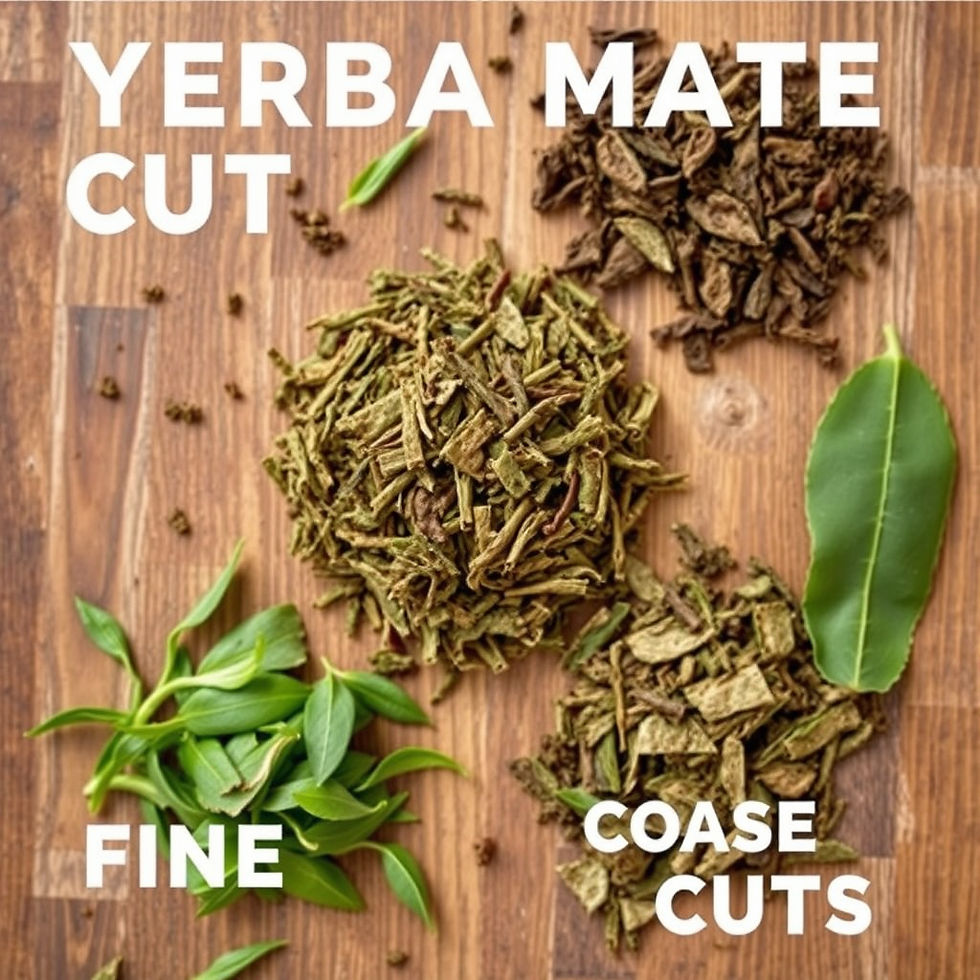
Paraguayan mate is typically cut coarse, with larger leaf pieces, visible stems, and sometimes even small twigs. This coarser cut gives a lighter, less dusty infusion that can be refilled many times — a traditional Paraguayan gourd might last 15-20 refills (cebadas) before losing flavour.
Argentine mate is ground much finer, often to a near-powder consistency with a high proportion of polvo (dust). This gives an intense, concentrated flavour from the first sip but exhausts more quickly — typically 8-12 refills. The fine grind also means you need a bombilla with a tighter filter to prevent clogging.
Flavour Profile Comparison
Here’s how the two styles compare across key flavour dimensions:
Bitterness — Paraguayan: Mild to moderate | Argentine: Strong
Smokiness — Paraguayan: Subtle wood-smoke (barbacuá) | Argentine: Minimal to none
Sweetness — Paraguayan: Natural vegetal sweetness | Argentine: Little to none
Body — Paraguayan: Smooth, round | Argentine: Sharp, robust
Complexity — Paraguayan: Layered, evolves across refills | Argentine: Consistent, front-loaded
Refills (cebadas) — Paraguayan: 15-20 | Argentine: 8-12
Cultural Traditions: Hot vs. Cold
Argentina is the world’s largest consumer of yerba mate, and the tradition centres on hot mate — sipped from a gourd throughout the day, often starting at breakfast. Argentine mate culture is deeply social: sharing a gourd in a circle (ronda) is a daily ritual for most households.
Paraguay holds a unique distinction: it’s the only country where cold mate — called tereré — is as popular as hot mate. In Paraguay’s subtropical heat, tereré is the national drink, prepared with ice-cold water or fruit juice and often infused with medicinal herbs (yuyos). Hot mate is reserved for cooler mornings. This dual tradition reflects Paraguay’s Guaraní heritage, where yerba mate has been used both as a daily beverage and as medicine for over 500 years.

Caffeine and Nutritional Differences
Both styles contain similar caffeine levels (70-90 mg per serving), but the extraction pattern differs. Paraguayan mate’s coarser cut releases caffeine more gradually, extending the energy curve. Argentine mate’s fine grind delivers caffeine faster, creating a more immediate but shorter-lasting effect.
A 2023 study in the Journal of Food Science found that organic yerba mate contains up to 40% more polyphenols than conventionally grown varieties. Since most Paraguayan artisanal producers use organic or semi-organic methods (shade-grown under native forest canopy), Paraguayan mate often scores higher in antioxidant content — though this depends more on farming practices than nationality.
Which Should You Choose?
Choose Paraguayan yerba mate if you prefer a smoother, more complex flavour with subtle smokiness, want more refills per session, are new to yerba mate and want a gentler introduction, enjoy both hot and cold preparations (tereré), or value extended aging and traditional processing.
Choose Argentine yerba mate if you prefer bold, intense flavour from the first sip, like a strong bitter profile similar to espresso, want maximum impact in fewer refills, or enjoy blends with added herbs like mint or citrus peel (common in Argentine brands).
Why Onoiru Sources from Paraguay
We chose Paraguay because it’s where yerba mate originated — the Guaraní people of the Itapúa region were the first to cultivate and consume it over five centuries ago. Our partner farms still use traditional methods: harvesting according to lunar cycles, drying over natural wood fire (barbacuá), and aging for over two years in wooden caskets. Over 130 farming families contribute to Onoiru’s supply, all certified organic and growing under native forest canopy.
The result is a yerba mate with exceptional smoothness, depth, and character — qualities that only come from patience, tradition, and respect for the land.
Discover the Paraguayan difference at onoiru.eu — premium organic yerba mate, direct from family farms to your cup.


Comments