
The Ultimate Guide to Yerba Mate: History, Benefits, Preparation & More
Yerba mate is one of the most consumed beverages on earth — yet most people outside South America have never tasted it. This guide covers everything you need to know: what yerba mate actually is, the science behind its health benefits, how it's traditionally prepared, the different types available, and why an organic Paraguayan mate from Onoiru might be the best cup you've never had.
What Is Yerba Mate?
Yerba mate (pronounced YEHR-bah MAH-teh) is a traditional South American drink made from the dried leaves and stems of the Ilex paraguariensis plant, a species of holly native to the subtropical forests of Paraguay, Argentina, Brazil, and Uruguay. The drink is prepared by steeping these dried leaves (called "yerba") in hot water, typically in a hollowed-out gourd ("mate") and sipped through a metal straw with a filter ("bombilla").
While often grouped with tea and coffee, yerba mate is botanically distinct from both. It's not a true tea (which comes from Camellia sinensis) and it's not coffee (from the Coffea genus). It occupies its own category — a caffeine-containing holly leaf infusion that has been consumed for over 500 years by the Guaraní people of Paraguay and their descendants.
A Brief History of Yerba Mate
The story of yerba mate begins with the Guaraní, the indigenous people of present-day Paraguay. They discovered that chewing the leaves of the Ilex paraguariensis tree provided sustained energy during long hunts and journeys through the subtropical forest. They called it "ka'a" — simply, "the plant" — reflecting its central importance in daily life.
When Spanish colonisers arrived in the 16th century, they initially tried to ban yerba mate, calling it the "devil's drink." That didn't last. Jesuit missionaries quickly recognised its value and established some of the first cultivated yerba mate plantations in the 1600s — many in Paraguay's Itapúa region, the same area where Onoiru's partner farms operate today.
By the 18th century, yerba mate had become the most traded commodity in the region, surpassing even tobacco and cotton. Today, it remains the national drink of Paraguay, Argentina, Uruguay, and southern Brazil, where an estimated 500 million cups are consumed daily across these countries.

The Science: 196 Active Compounds
Yerba mate contains 196 active chemical compounds — more than green tea, which has 144. This remarkable biochemical complexity is what makes mate unique among caffeinated beverages. The key compound groups include:
Xanthines (caffeine, theobromine, theophylline) provide the stimulant effect. Unlike coffee which relies almost entirely on caffeine, mate's trio of xanthines works synergistically. Caffeine sharpens focus, theobromine (the same compound in chocolate that creates a "feel-good" sensation) provides smooth, sustained energy, and theophylline supports respiratory function and blood flow.
Polyphenols and flavonoids are the antioxidant powerhouses. Yerba mate scores approximately 10,000 μmol TE/g on the ORAC (Oxygen Radical Absorbance Capacity) scale — about four times higher than green tea and significantly higher than coffee. These compounds help neutralise free radicals and support cellular health.
Saponins contribute to mate's characteristic slightly bitter taste and have demonstrated anti-inflammatory and cholesterol-lowering properties in laboratory studies. Chlorogenic acids, shared with coffee, support metabolism and blood sugar regulation.
Vitamins and minerals round out the profile: vitamins B1, B2, B3, B5, and C, along with iron, potassium, zinc, magnesium, and manganese. This makes yerba mate one of few caffeinated beverages that actually contributes meaningful micronutrients to your diet.
Proven Health Benefits of Yerba Mate
Research into yerba mate's health effects has accelerated in recent years. Here are the benefits supported by scientific evidence:
Antioxidant and Anti-Inflammatory Activity
Multiple peer-reviewed studies confirm that yerba mate has higher antioxidant activity than green tea, black tea, and coffee. A 2022 systematic review in Nutrients journal found that regular mate consumption was associated with reduced markers of oxidative stress and inflammation. The polyphenols in mate help protect cells from damage and may reduce the risk of chronic diseases.
Cardiovascular Health
Yerba mate has been shown to improve cholesterol profiles by increasing HDL ("good" cholesterol) and reducing LDL ("bad" cholesterol) oxidation. The saponins in mate inhibit cholesterol absorption in the gut, while the antioxidants protect blood vessel walls from damage. A clinical study published in the Journal of the American College of Nutrition found that participants who consumed yerba mate daily for 40 days showed significant improvements in their lipid profiles.
Weight Management
Research suggests yerba mate can support weight management through multiple mechanisms: it increases fat oxidation during exercise, reduces appetite, and boosts metabolic rate. A 2015 study in the Journal of Functional Foods found that yerba mate supplementation increased the reliance on fat as a fuel source during moderate-intensity exercise by 24%.
Mental Focus and Cognitive Function
The combination of caffeine and theobromine in yerba mate produces a state that regular drinkers describe as "alert but calm" — focused without the anxiety that coffee can cause. Studies have confirmed that mate improves short-term memory, reaction time, and sustained attention. Critically, these benefits come without the "jitters" commonly associated with equivalent doses of coffee caffeine, thanks to the moderating effects of theobromine and L-theanine.
Bone Density
Interestingly, while coffee consumption is associated with reduced bone density in some studies, yerba mate appears to have the opposite effect. A study of postmenopausal women in Uruguay found that regular mate drinkers had higher bone mineral density in their lumbar spine and femoral neck compared to non-drinkers — even after controlling for other lifestyle factors.
Caffeine in Yerba Mate: What You Need to Know
Yerba mate contains approximately 85 mg of caffeine per 240 ml serving. For context: a cup of brewed coffee has about 95 mg, black tea has about 47 mg, green tea has about 28 mg, and a can of Red Bull has about 80 mg. So mate sits right between coffee and energy drinks in terms of raw caffeine content.
But caffeine content alone doesn't tell the full story. The way mate delivers its energy — gradually, over 4–6 hours, without a crash — is fundamentally different from coffee's sharp spike-and-drop pattern. This sustained release is why many people who switch from coffee to mate report feeling "more evenly energised" throughout the day.
Traditional mate drinking also involves multiple "refills" (cebadas): you add hot water to the same yerba leaves repeatedly, extracting caffeine gradually across 10–20 servings from a single preparation. This makes the total caffeine intake highly customisable — you control how much you consume by how many refills you take.
Types of Yerba Mate: Paraguayan vs Argentine vs Brazilian
Not all yerba mate is the same. The three major producing countries each have distinct traditions that result in very different products:
Paraguayan Yerba Mate
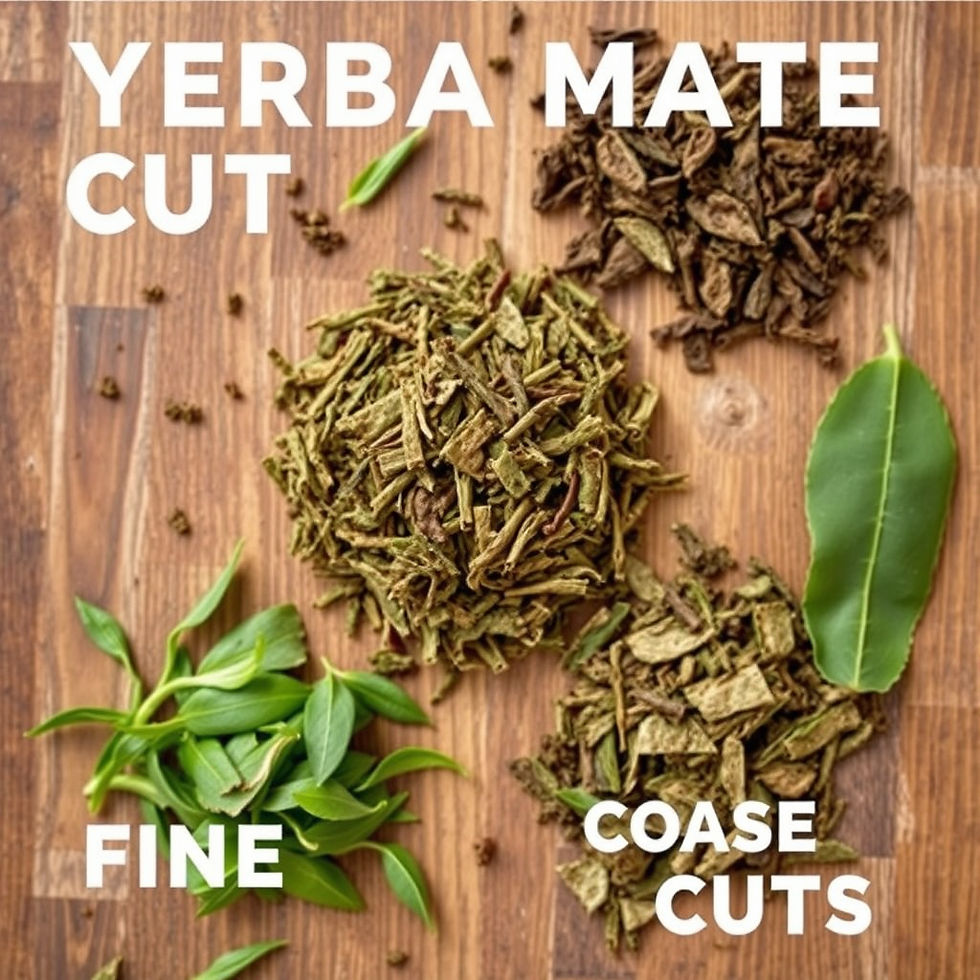
Paraguayan yerba mate is distinguished by its long aging process — typically 12 to 24 months in wooden caskets, compared to just a few months for most Argentine brands. This extended aging mellows the flavour, reduces bitterness, and develops complex woody and herbal notes. Paraguayan mate also tends to have a finer cut with more powder ("polvo"), which creates a thicker, more full-bodied brew. The traditional Paraguayan preparation is "terere" (cold mate), consumed with ice water or herbal infusions, though hot mate is equally popular.
Onoiru's yerba mate exemplifies the best of Paraguayan tradition: organic, shade-grown under native forest canopy in the Itapúa region, harvested according to lunar cycles, dried over natural wood fire using the barbacuá method, and aged for over two years. This patience and tradition produce a mate of exceptional smoothness and depth.
Argentine Yerba Mate
Argentina is the world's largest producer and consumer of yerba mate. Argentine mate tends to have a coarser cut with more stems ("palos"), shorter aging (3–9 months), and a more robust, sometimes sharper flavour profile. Popular brands include Cruz de Malta, Taragui, and Playadito. Argentine mate culture centres on the hot "mate cebado" — a social ritual of passing the gourd in a circle.
Brazilian Yerba Mate (Erva-Mate)
In Brazil, particularly the southern states of Paraná, Santa Catarina, and Rio Grande do Sul, yerba mate is called "erva-mate" and prepared as "chimarrão." Brazilian erva-mate is very finely ground to an almost powder consistency, bright green in colour (indicating minimal aging), and has a fresh, grassy, vegetal flavour. It produces a thick, frothy brew and is consumed very hot. Brazil also popularised "mate gelado" (iced mate tea) as a commercial bottled beverage.
How to Prepare Yerba Mate: Traditional Method
Preparing mate the traditional way is simple once you know the steps. Here's how:
Step 1 — Fill the gourd: Add yerba mate to your gourd until it's about two-thirds full. Tilt the gourd to one side so the yerba forms a slope, with a gap on one side.
Step 2 — Add cool water first: Pour a small amount of cool or lukewarm water into the gap at the bottom of the slope. This "tempers" the yerba and protects it from being burned by hot water. Wait 30 seconds for the leaves to absorb.
Step 3 — Insert the bombilla: Place your bombilla (filtered metal straw) into the wet yerba at the bottom of the slope. Press it firmly and don't move it once placed — this is important for a clean draw.
Step 4 — Add hot water: Heat water to 70–80°C (160–175°F) — not boiling, as this burns the leaves and creates bitterness. Pour the hot water into the gap, not over the dry yerba on top. The dry yerba acts as a reserve that gradually hydrates with subsequent pours.
Step 5 — Sip and refill: Drink the entire pour through the bombilla (don't leave it to steep), then add more hot water. You can repeat this 10–20 times with the same yerba before the flavour is exhausted. Each refill ("cebada") will taste slightly different as different compounds extract.
Pro tip: The first one or two sips are the strongest and most bitter — these are called the "cebador's" sips in the social ritual, taken by the person preparing the mate. The subsequent pours become smoother and more balanced.

Buying Guide: What to Look for in Yerba Mate
Not all yerba mate is created equal. Here are the key factors to consider when choosing a quality mate:
Organic certification matters. Conventional yerba mate may be treated with pesticides and herbicides. A 2023 study in the Journal of Food Science found that organic yerba mate contains up to 40% more polyphenols than conventionally grown varieties, likely because the plant produces more protective compounds when grown without synthetic inputs.
Aging duration affects flavour and smoothness. Younger mates (3–6 months) tend to be more bitter and "green." Well-aged mates (12–24+ months) develop smoother, more complex flavour profiles with reduced bitterness. Onoiru's mate is aged over 24 months — among the longest in the industry.
Processing method influences character. The barbacuá method (slow drying over natural wood fire) produces a smoky, complex character. Industrial hot-air drying ("secado por cinta") is faster but produces a flatter taste. Sapeco (flash-heating over flame) is the initial step that stops oxidation and preserves colour.
Origin and traceability tell you about quality and ethics. Know where your mate comes from. Is it plantation-grown or shade-grown? Are the farmers fairly compensated? Onoiru works directly with over 130 farming families in Paraguay's Itapúa region, ensuring fair trade practices and environmental stewardship.
Frequently Asked Questions About Yerba Mate
Is yerba mate safe to drink every day?
Yes. Yerba mate has been consumed daily by millions of people in South America for centuries. Moderate consumption (3–4 servings per day) is considered safe by most health authorities. As with any caffeinated beverage, excessive consumption should be avoided, particularly during pregnancy.
Does yerba mate have more caffeine than coffee?
Slightly less, per serving. Yerba mate contains approximately 85 mg of caffeine per 240 ml cup, compared to coffee's 95 mg. However, because mate is typically consumed across many refills from the same leaves, total daily caffeine intake varies widely based on preparation style.
Can I drink yerba mate cold?
Absolutely. Cold yerba mate is called "terere" and it's the preferred preparation in Paraguay, especially during summer. Prepare it the same way as hot mate, but use cold water or ice water. Many Paraguayans add medicinal herbs or citrus juice to their terere water for additional flavour.
What does yerba mate taste like?
Yerba mate has an earthy, herbaceous flavour with a slight bitterness and vegetal sweetness. Well-aged Paraguayan mate (like Onoiru's) has additional woody and subtly smoky notes. The taste mellows significantly across multiple refills, and many people find they appreciate mate's complexity more as they develop a palate for it.
Where can I buy organic yerba mate in Europe?
Onoiru is the exclusive European distributor of premium organic Paraguayan yerba mate. We ship to Germany, Slovakia, the UK, the Czech Republic, and throughout the EU. Visit onoiru.eu to explore our collection and order directly.
Why Onoiru? Our Story
Onoiru exists because we believe Europeans deserve access to yerba mate the way it's meant to be — organic, traditionally crafted, and directly sourced from the people who grow it. Our mate comes from over 130 farming families in Paraguay's Itapúa region, where the Ilex paraguariensis tree has grown for millennia under the canopy of native subtropical forests.
Every step of our production follows tradition: the leaves are harvested according to lunar cycles (when sap content is optimal), flash-heated over open fire (sapeco) to halt oxidation, slowly dried using the barbacuá method over natural wood fire, and then aged for over two years in wooden caskets. No shortcuts. No additives. No artificial flavouring.
The result is a yerba mate of exceptional smoothness and depth — one that honours the 500-year tradition of the Guaraní people while meeting the highest European organic standards. Whether you're a longtime mate drinker or completely new to it, Onoiru invites you to experience the difference that patience, tradition, and honest farming make.
Explore our collection at onoiru.eu and discover why yerba mate is the world's best-kept secret — for now.


Comments